
Joining forces against emerging microbial threats
More than 60% of emerging infectious diseases reported globally come from animals.
Yet zoonotic disease is only part of a wider challenge. According to the World Health Organization (WHO), threats arising at the interface of humans, animals, plants and the environment are becoming more frequent and complex, with consequences for public health, food systems, livelihoods, trade, and biodiversity.
The One Health approach brings traditionally separate fields together to address such challenges ranging from antimicrobial resistance (AMR) and zoonotic diseases to food safety and environmental concerns. WHO highlights stronger prevention, earlier detection and integrated surveillance as essential to tackling these interconnected threats.
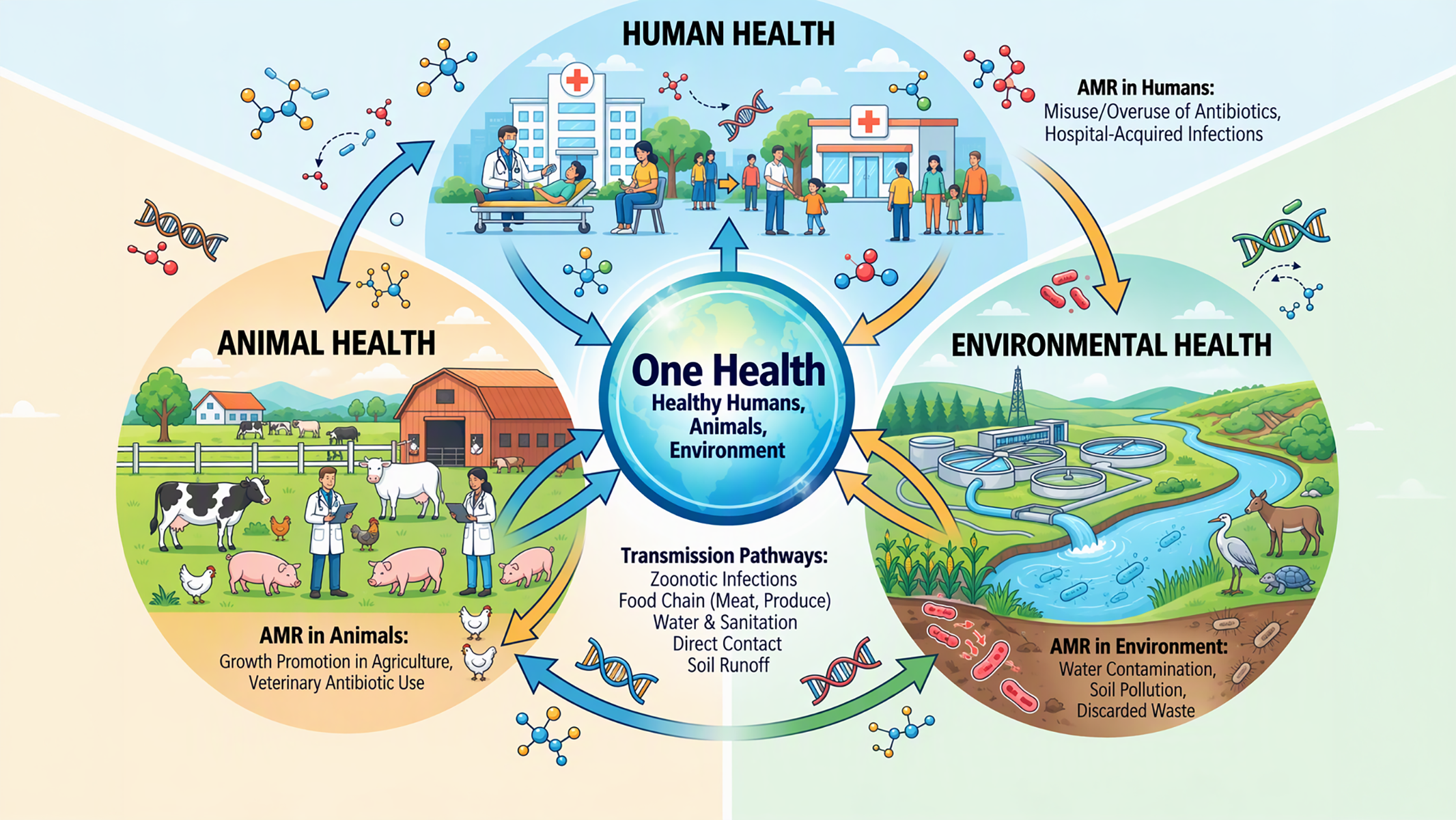
RIM will study AMR under the One Health framework using surveillance data to understand how resistance evolves and spreads and to inform mitigation strategies.
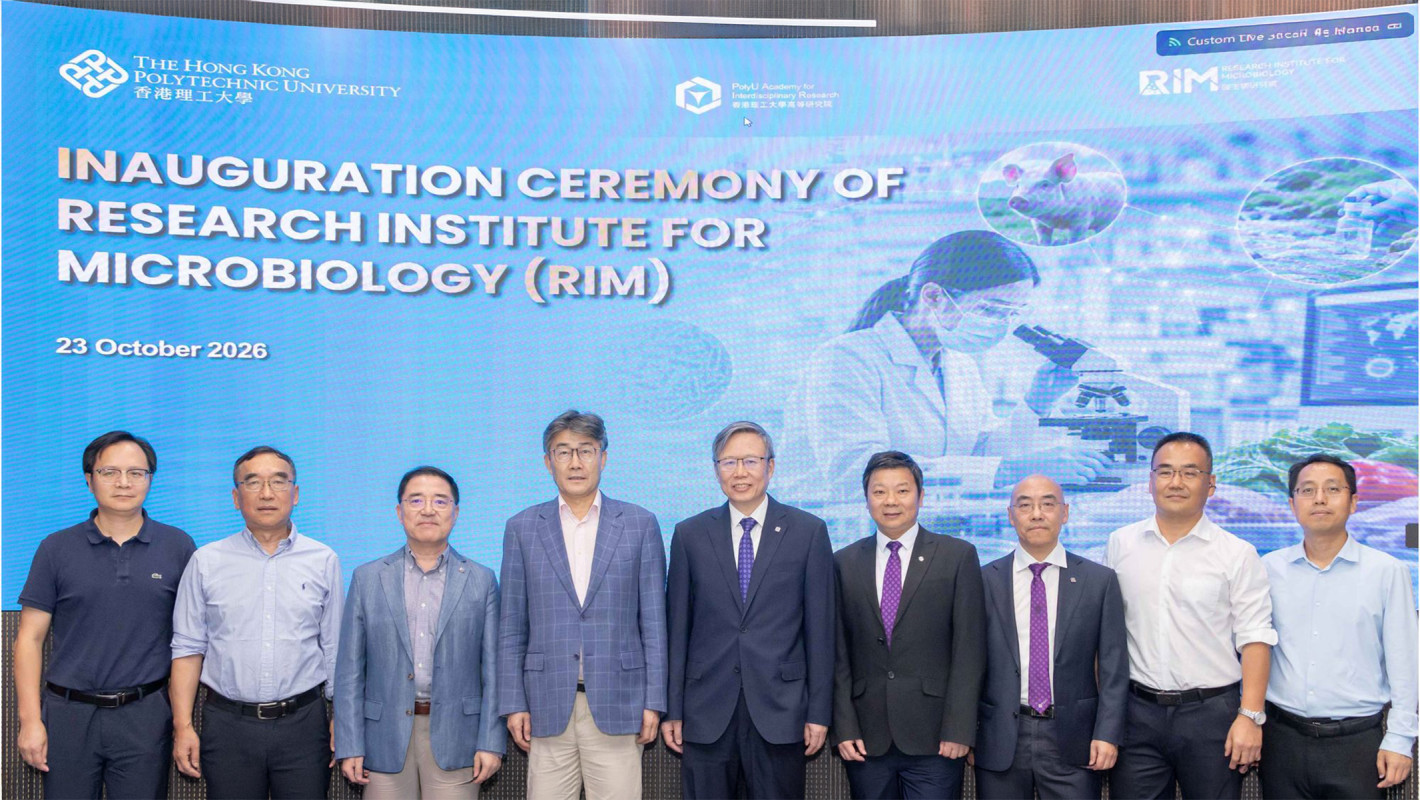
Against this backdrop, PolyU established its Research Institute for Microbiology (RIM) under the One Health framework, bringing together microbiology, food science, environmental science, health services and artificial intelligence (AI), seeking to translate scientific discoveries into advances including spanning precision diagnostics and novel therapeutics.
Led by Professor Chen Sheng, Director of RIM, Head of the Department of Food Science and Nutrition and Chair Professor of Microbiology, the Institute focuses on five interconnected areas: infectious diseases; bacterial AMR under the One Health framework; drug and vaccine development; beneficial microorganisms and human health; and an AI core that integrates the other four research programmes.
Building a multidisciplinary defence
This breadth reflects the complexity of microbial challenges. Resistant microorganisms can move across humans, animals and the environment, while emerging infectious diseases demand faster detection and more effective surveillance. Research into beneficial microorganisms will explore how microbiology can be harnessed to promote human health.
AI adds another dimension to this work. By analysing complex biological datasets, computational approaches can help researchers uncover disease mechanisms, identify promising targets and accelerate biomedical discovery.
Professor Zhang Weixiong, Associate Director of PAIR and RIM, highlighted the Institute’s role in connecting expertise across PAIR’s research units and across its three research themes: advanced technology and manufacturing, good health and well-being, as well as smart and sustainable cities.
From scientific discovery to new solutions
The potential created by combining biomedical science with emerging technologies were further illustrated by Professor Gao Fu, Director of the CAS Key Laboratory of Pathogenic Microbiology and Immunology at the Institute of Microbiology, Chinese Academy of Sciences. In his keynote lecture on “AI-Empowered Vaccine Development”, he shared research advances in COVID-19 vaccines, therapeutic antibodies and T-cell immunotherapy, and explained how AI can facilitate antibody design and modification.
RIM’s ambition extends beyond microbial threats after they emerge. By combining expertise across disciplines under the One Health framework, the Institute aims to better anticipate and address emerging risks. The integrated approach could strengthen preparedness for future health challenges, while opening new avenues for scientific discovery and biotechnology.