
Seeing beyond the tumour: Advancing precision breast cancer treatment
When the same treatment brings different results
Breast cancer remains the most common cancer among women in Hong Kong. The latest official figures recorded 5,585 new cases among women in 2023, while 848 women died from the disease in 2024. Globally, around 2.4 million women were diagnosed with breast cancer in 2024, with some 694,000 deaths.
Behind these numbers lies a major challenge in cancer care. Even when patients are diagnosed with the same type of breast cancer, their tumours can differ considerably in their biological characteristics. This tumour heterogeneity can affect how individual patients respond to the same treatment, making it difficult to determine in advance which therapy is most likely to work.
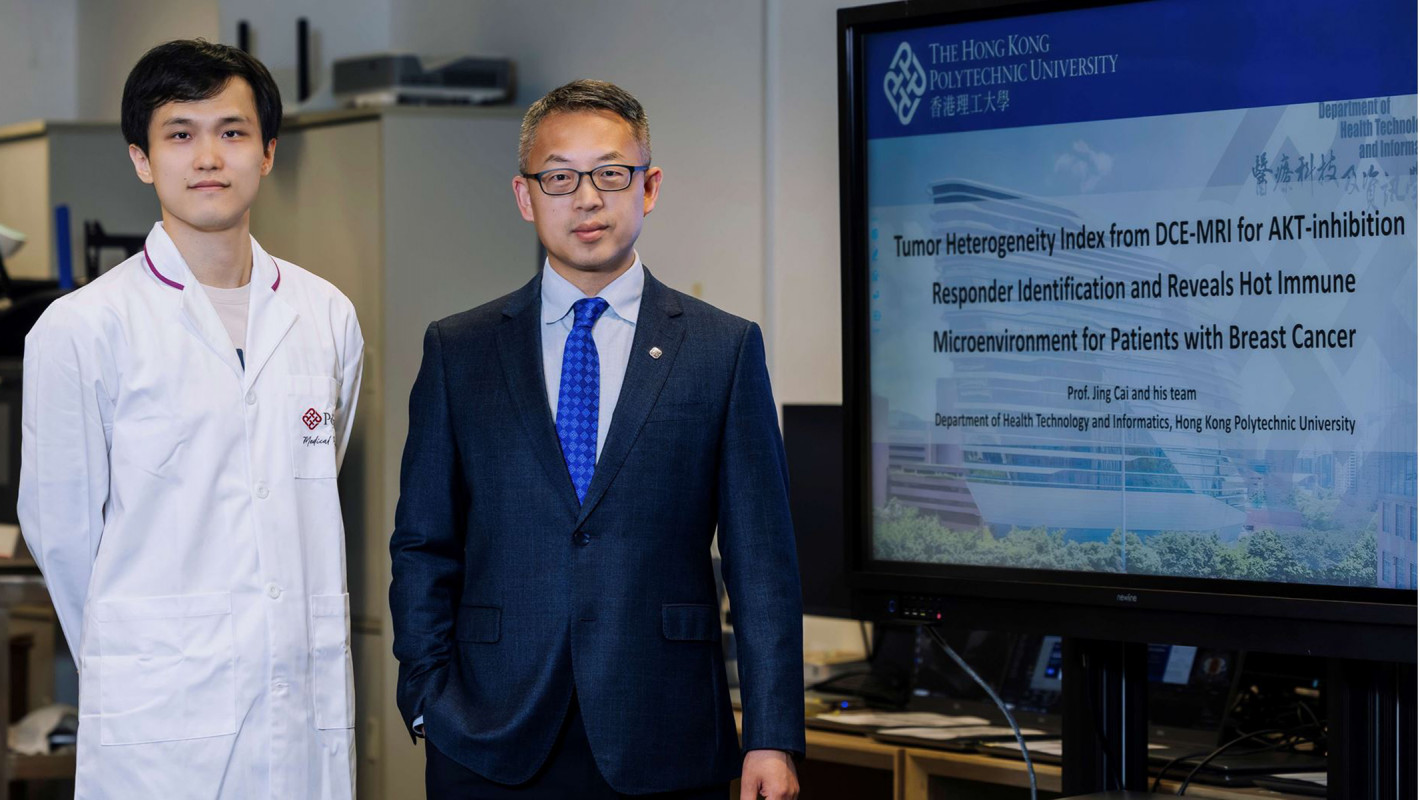
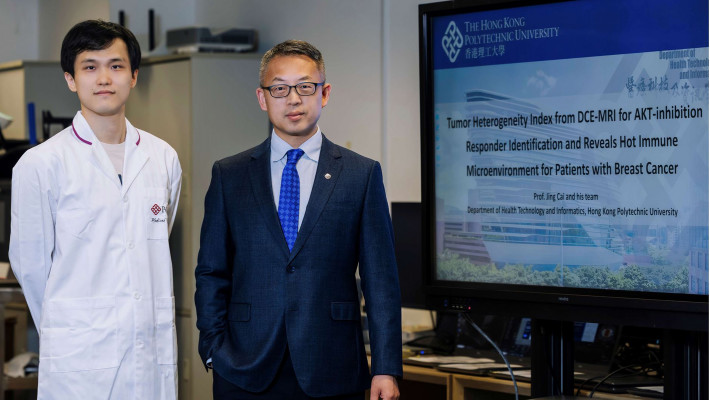
Researchers at The Hong Kong Polytechnic University (PolyU) are seeking to address this challenge. Led by Prof. Cai Jing, Head of the Department of Health Technology and Informatics and Chair Professor of Medical Physics and Intelligent Oncology, together with Dr Teng Xinzhi, Research Assistant Professor, the team has developed the Tumour Heterogeneity Index (THI), an imaging biomarker that can help predict breast cancer patients’ response to treatment before therapy begins.
Revealing what medical images can tell us
THI uses advanced radiomics to analyse dynamic contrast-enhanced magnetic resonance imaging (DCE-MRI). Radiomics extracts quantitative information from medical images, enabling the researchers to identify and measure subtle variations within a tumour that may not be apparent through conventional image assessment. In this way, scans used in breast cancer care could provide additional information to support treatment decisions.
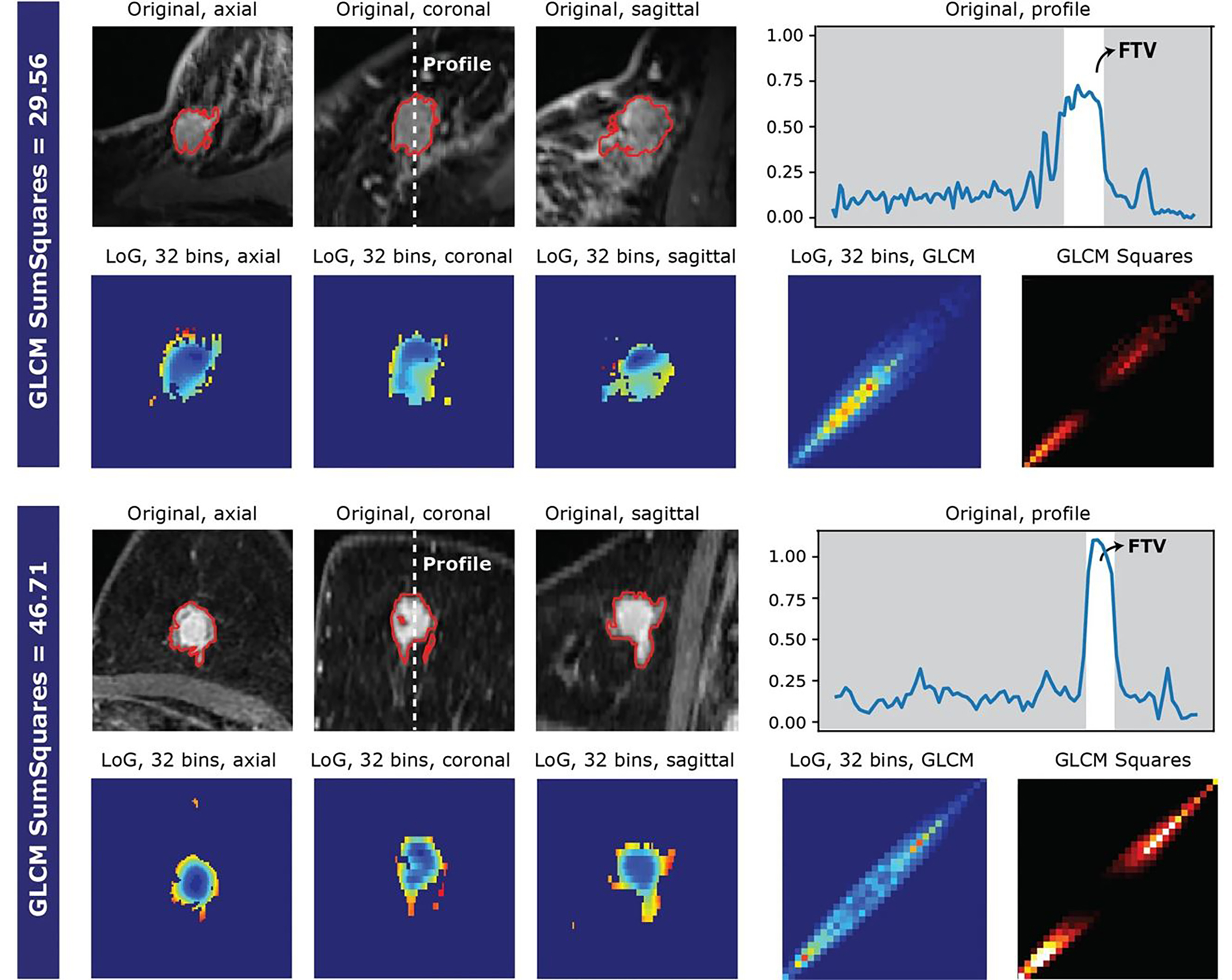
Advanced radiomics reveals subtle differences between breast cancer tumours that may appear similar, turning medical images into valuable information for predicting drug response.
The team studied high-risk, early-stage breast cancer patients receiving an investigational AKT inhibitor alongside chemotherapy before surgery. Patients identified as having a high THI achieved an estimated 56.1% pathological complete response rate, significantly higher than those with a low THI. The index also showed promise in challenging breast cancer subtypes, including triple-negative breast cancer.
Importantly, THI derives this information from medical imaging already widely used in breast cancer diagnosis. The approach could therefore potentially reduce reliance on costly genetic sequencing and repeated invasive biopsies. The researchers have also demonstrated its reproducibility across different scanners and medical institutions, supporting its potential for wider clinical application.
Towards more personalised cancer care
The potential impact extends beyond predicting whether a particular therapy will work. Identifying likely treatment response before therapy begins could help clinicians choose more appropriate treatment strategies, while sparing some patients from ineffective treatments and unnecessary side effects. It could also enable treatment plans to reflect differences within individual tumours rather than relying only on broader cancer classifications.
This becomes increasingly significant as the global burden of breast cancer grows. The International Agency for Research on Cancer projects that annual new cases could reach 3.2 million by 2050. The World Health Organization estimates that achieving its target of reducing global breast cancer mortality by 2.5% annually could avert 2.5 million premature deaths between 2020 and 2040.
By uncovering clinically meaningful differences hidden within medical images, THI could help move breast cancer care towards a more personalised future, where treatment is guided not only by the type of cancer a patient has, but also by how her individual tumour is likely to respond.