
Education
01/2021 - 07/2024
The Hong Kong Polytechnic University (QS Global world ranking 2027: 50th)
Department of Aeronautical and Aviation Engineering
GPA: 3.49/4 Degree: Doctor of Philosophy
Major: Aviation Engineering (Human factors)
Supervisor: Prof. Kam K.H. Ng
07/2023 - 10/2023
Nanyang Technological University (QS Global world ranking 2027: 12th)
School of Mechanical and Aerospace Engineering
Degree: Exchanged Doctor of Philosophy
Research Student Attachment Programme
Host supervisor: Prof. Chun-Hsien Chen
09/2017 - 06/2020
Shandong University (985 & 211, QS Global world ranking 2027: 309th)
School of Mechanical Engineering
GPA: 90/100 Degree: Master of Engineering
Major: Design Science
Supervisor: Prof. Heshan Liu
09/2013 - 06/2017
Shandong University (985 & 211, QS Global world ranking 2027: 309th)
School of Mechanical Engineering
GPA: 4.17/5 Degree: Bachelor of Engineering
Major: Industrial Design
Employment
11/2024 - Present
The Hong Kong Polytechnic University (HKSAR, China)
Faculty of Engineering (FENG)
Department of Aeronautical and Aviation Engineering (AAE)
Position: Research Assistant Professor
08/2024 - 10/2024
The Hong Kong Polytechnic University (HKSAR, China)
Faculty of Engineering (FENG)
Department of Aeronautical and Aviation Engineering (AAE)
Position: Postdoctoral Fellow
Principal Investigator: Prof. Kam. K.H. Ng
01/2024 - 07/2024
The Hong Kong Polytechnic University (HKSAR, China)
Faculty of Engineering (FENG)
Department of Aeronautical and Aviation Engineering (AAE)
Position: Project Associate
Principal Investigator: Prof. Kam. K.H. Ng
Research Interest
1) ‘Human-centred’ intelligent transportation system (driving, aviation and eVtol).
2) Neuro networks and AI-driven applications.
3) Data-driven transport safety.
4) Neuro-ergonomic and neurophysiological computing in transportation.
5) Cognitive science and modelling.
6) Human/Brain-computer interaction.
7) Pattern analysis on situational awareness, fatigue, stress, and cognitive load.
8) Human factors engineering and experiment-oriented ergonomics in transportation.
9) ‘Human-centred’ industrial design, interaction, and assessment.
Signature research outcomes
Core Research
Research 1: Human Error Prevention in Cockpits through Fine-tuning Large Language Models for Precautioning Dual-pilot Communication Information Gaps.
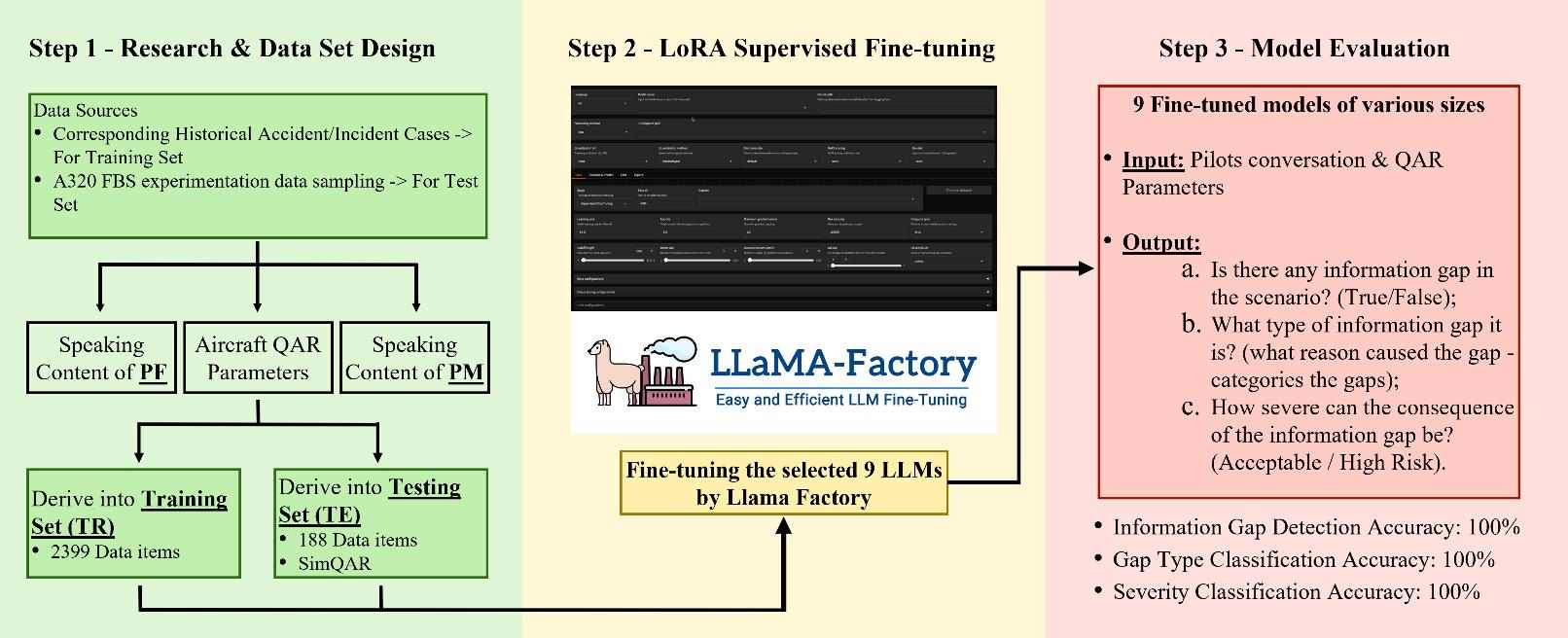
This study builds an LLM‑powered passive cockpit monitoring system to identify, categorise, and evaluate information gaps in dual‑pilot communication and reduce flight‑related human errors. Based on Shannon’s communication framework, it defines two gap types and two risk severity levels, constructing a training dataset from past aviation incidents and a simulator‑based test dataset combining pilot dialogue and simulated aircraft QAR parameters. Nine LLMs of different sizes are finetuned and assessed. Results demonstrate fine‑tuning greatly enhances task performance, and integrating aircraft state data substantially improves accuracy, particularly for severity evaluation. Model effectiveness relies on model families and instruction‑following ability rather than merely parameter size. The research provides references for deploying non‑intrusive AI safety tools in aircraft cockpits.
Main contributions of Research 1:
1) It introduces a novel data-fusion framework that synchronises real-time aircraft parameters with interpersonal pilot communications, yielding a specialised training dataset and a simulator-validated test dataset.
2) It pioneers a multidimensional semantic taxonomy tailored for cockpit communication, enabling fine-tuned LLMs not merely to perform binary detection of information gaps but to systematically classify gap types and evaluate their operational severity.
3) Through a comprehensive comparative evaluation of nine distinct LLMs across various brands and parameter sizes, this study identifies specific model characteristics that represent better prediction accuracy in this specific task scenario.
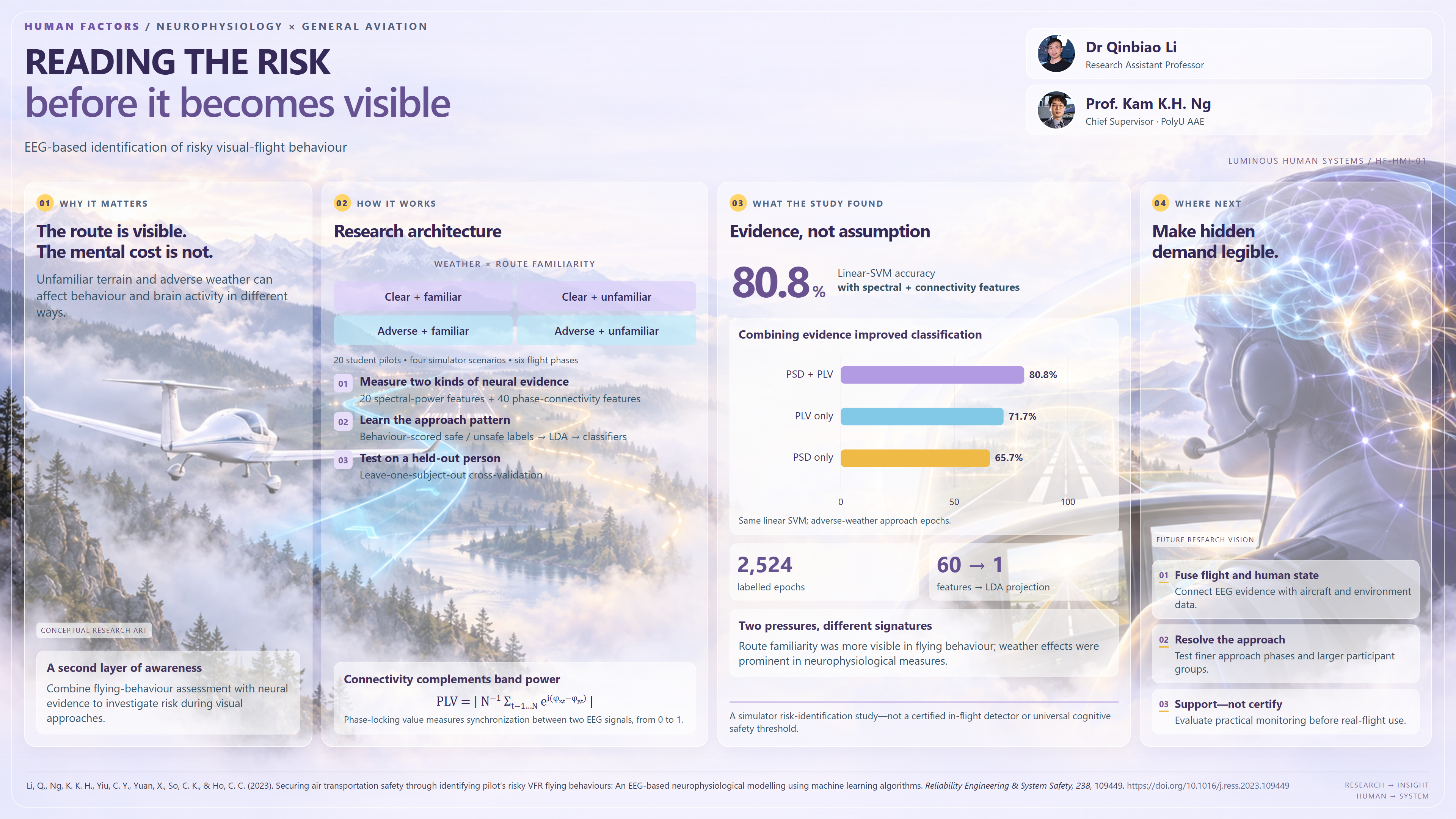
Research 2: Securing air transportation safety through identifying pilot’s risky VFR flying behaviours: An EEG-based neurophysiological modelling using machine learning algorithms.
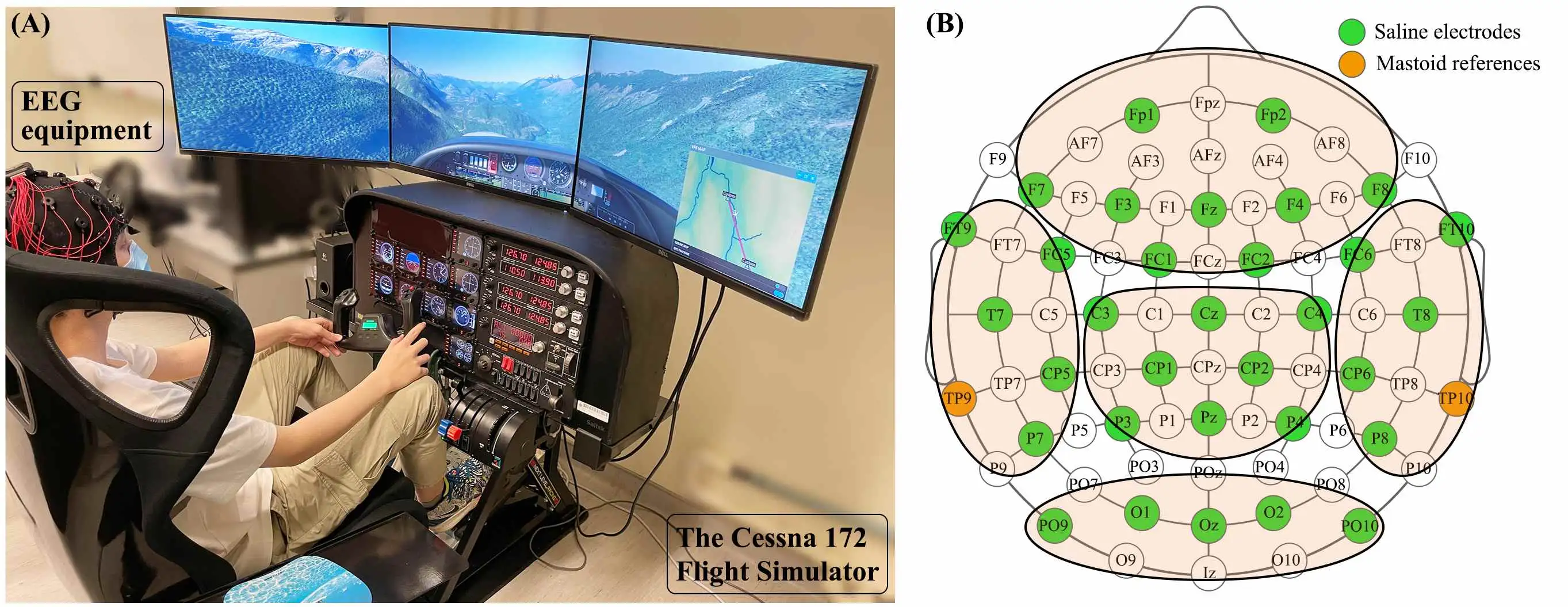
This simulator‑based study investigates how weather and route familiarity affect general‑aviation pilots’ VFR flight performance and brain neurophysiology measured via EEG. In‑experienced flight routes explicitly degraded operational behaviours, while adverse weather mainly triggered higher mental workload reflected in EEG power‑spectrum and brain‑connectivity metrics without obvious behavioural drops. Using machine‑learning classifiers on approach‑phase EEG features, the SVM‑L model achieved a maximum classification accuracy of 80.8% for identifying risky flight behaviours. The research highlights that weather imposes hidden mental‑resource burdens, and EEG neurophysiological signals can serve as supplementary indicators for building future real‑time safety prediction systems for general aviation.
Main contributions of Research 2:
1) examine to what extent the meteorological and flight route situations will affect GA pilots’ performance in terms of flight behaviour and cognitive neurophysiological activity while flying under VFR and investigate how the flight phases moderate these impacts.
2) identify the pilots’ risky flight behaviour under VFR flying in adverse weather by only considering the EEG-based data using ML algorithms to build neurophysiological modelling, enhancing air transportation safety via artificial intelligence.
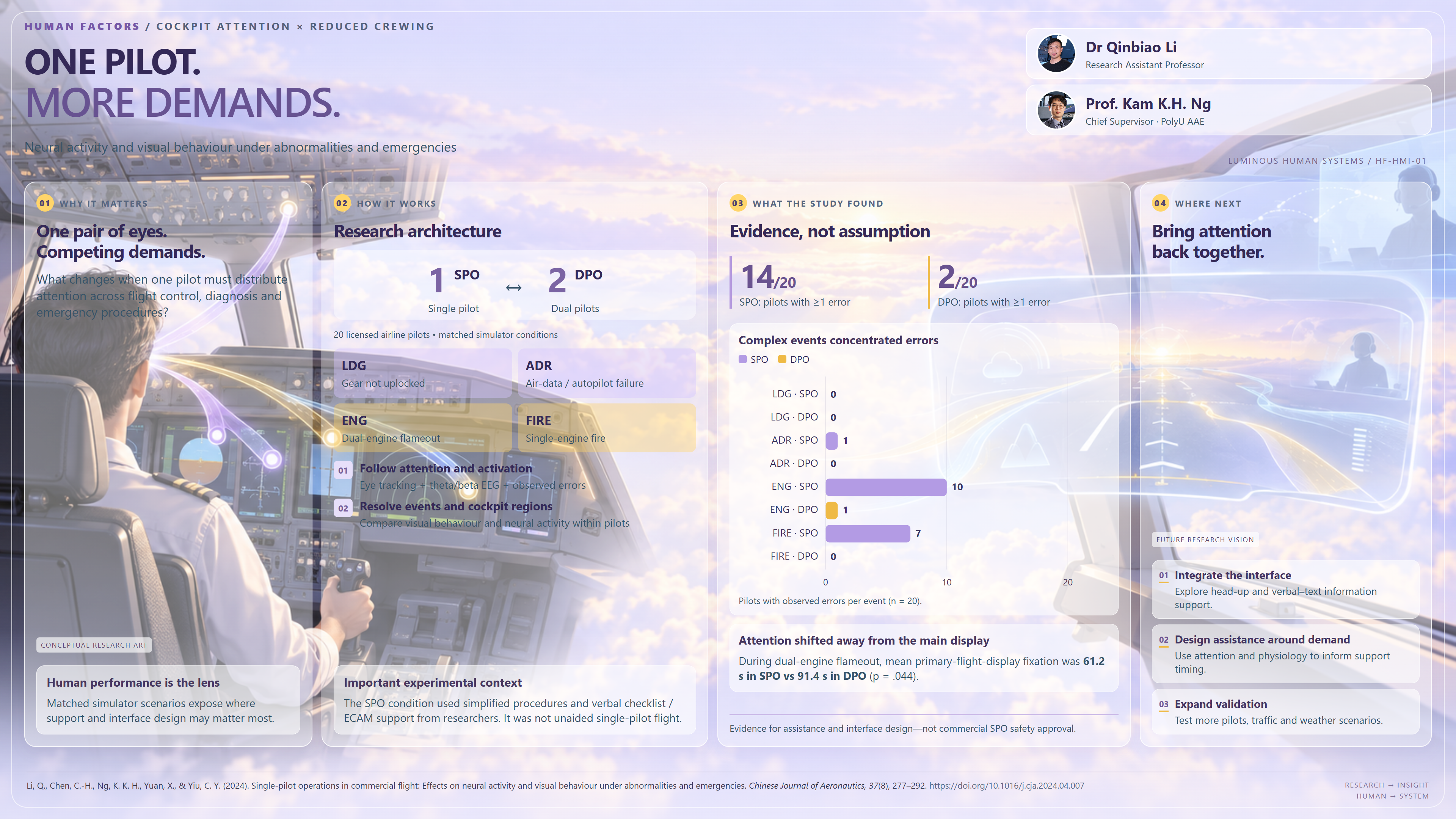
Research 3: Single-pilot operations in commercial flight: effects on neural activity and visual behaviour under abnormalities and emergencies.
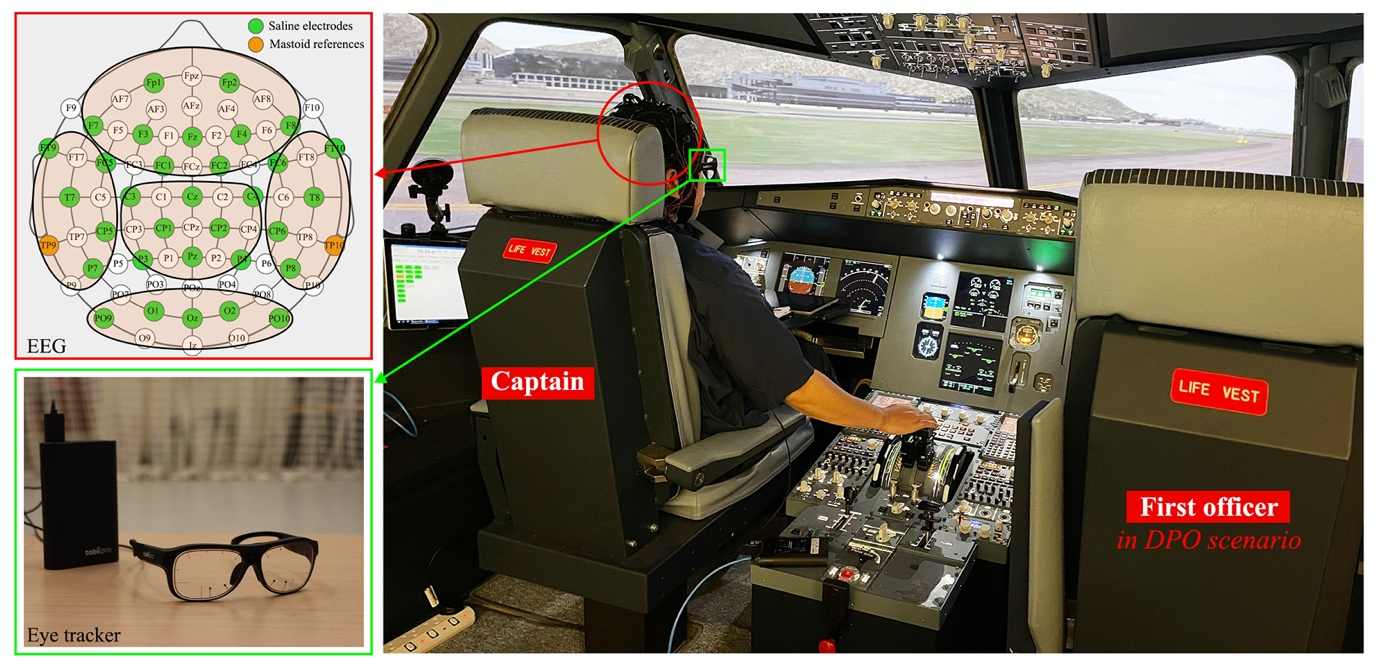
This simulator-based study explores commercial single-pilot operations (SPO) by comparing captains’ neural activity, visual scanning behaviours, flight performance and subjective perceptions between SPO and traditional dual-pilot operations (DPO) under onboard abnormalities and emergencies. Twenty qualified pilots completed simulated A320 flights with four emergency scenarios, with physiological data collected via EEG and eye-tracker. In complex emergencies, SPO triggered significantly higher θ- and β-band brain activity across frontal, parietal and temporal lobes. Pilots’ gaze became more dispersed: they spent less time on the primary flight display while increasing fixations on secondary panels. More operational errors occurred under SPO, and pilots subjectively reported higher workload, poorer performance and lower safety confidence. Cross-correlating multimodal data identified physiological patterns linked to unsafe operations. The findings provide physiological references for developing SPO-oriented intelligent flight systems, cockpit interface upgrades and relevant operational policies, while noting that current cockpit set-ups carry evident risks for single-pilot emergency handling.
Main contributions of Research 3:
1) using the physiological, objective, and subjective measurements to assess the captain’s external and internal performance differences from dual-pilot to single-pilot operations.
2) cross-correlating the multimodal data to reveal an initial physiological-based ‘red line’ under abnormalities and emergencies, which could provide references for an SPO-oriented intelligent flight system about unsafe flight operations when flying alone.
3) extracting the transformed neural activity and scanning behaviours to highlight the SPO-specific operational characteristics.
Selected Publications
Journal Paper
[1] Liang, H., Li, Q.*, Wang, L., Chi, C.F., Zhang, Y., & Ng, K.K.H. (2026). Human Error Prevention in Cockpits: A Fine-tuning Large Language Model for Precautioning Dual-pilot Communication Information Gaps. Advanced Engineering Informatics, 76, 105081. doi: https://doi.org/10.1016/j.aei.2026.105081 (IF:11.5, Q1, Rank 4/178 (2%) in Engineering, Multidisciplinary)
[2] Yuan, X., Ng, K. K. H., Li, Q.*, Yiu, C. Y., Zhou, Q., & Bu, Y. (2025). From Unrecognised to Incapacitating: Neuro-ergonomic Differentiation of Spatial Disorientation Typologies Induced by Visual Illusions for Pilot Cognitive Training and Cockpit Design, Chinese Journal of Aeronautics, 39(6), 103992. doi: https://doi.org/10.1016/j.cja.2025.103992 (IF: 6.9, Q1, Rank 5/59 (7.6%) in Engineering, Aerospace)
[3] Li, Q., Chen C.H., Ng, K.K.H., Yuan X., & Yiu, C.Y. (2024). Single-pilot operations in commercial flight: effects on neural activity and visual behaviour under abnormalities and emergencies. Chinese Journal of Aeronautics, 37(8), 277-292. doi: https://doi.org/10.1016/j.cja.2024.04.007 (IF: 6.9, Q1, Rank 5/59 (7.6%) in Engineering, Aerospace)
[4] Li, Q., Ng, K.K.H., Yiu, C.Y., Yuan, X., So, C.K., & Ho, C.C. (2023). Securing air transportation safety through identifying pilot’s risky VFR flying behaviours: An EEG-based neurophysiological modelling using machine learning algorithms. Reliability Engineering & System Safety, 238, 109449. doi: https://doi.org/10.1016/j.ress.2023.109449 (IF: 13.7, Q1, Rank 2/109 (1.4%) in Operations Research & Management Science)
[5] Li, Q., Ng, K.K.H., Yu, S.C.M., Yiu, C.Y., & Lyu, M. (2023). Recognising situation awareness associated with different workloads using EEG and eye-tracking features in air traffic control tasks. Knowledge-Based Systems, 260, 110179. doi: https://doi.org/10.1016/j.knosys.2022.110179 (IF: 8.0, Q1, Rank 34/210 (14%) in Computer Science, Artificial Intelligence)
Awards
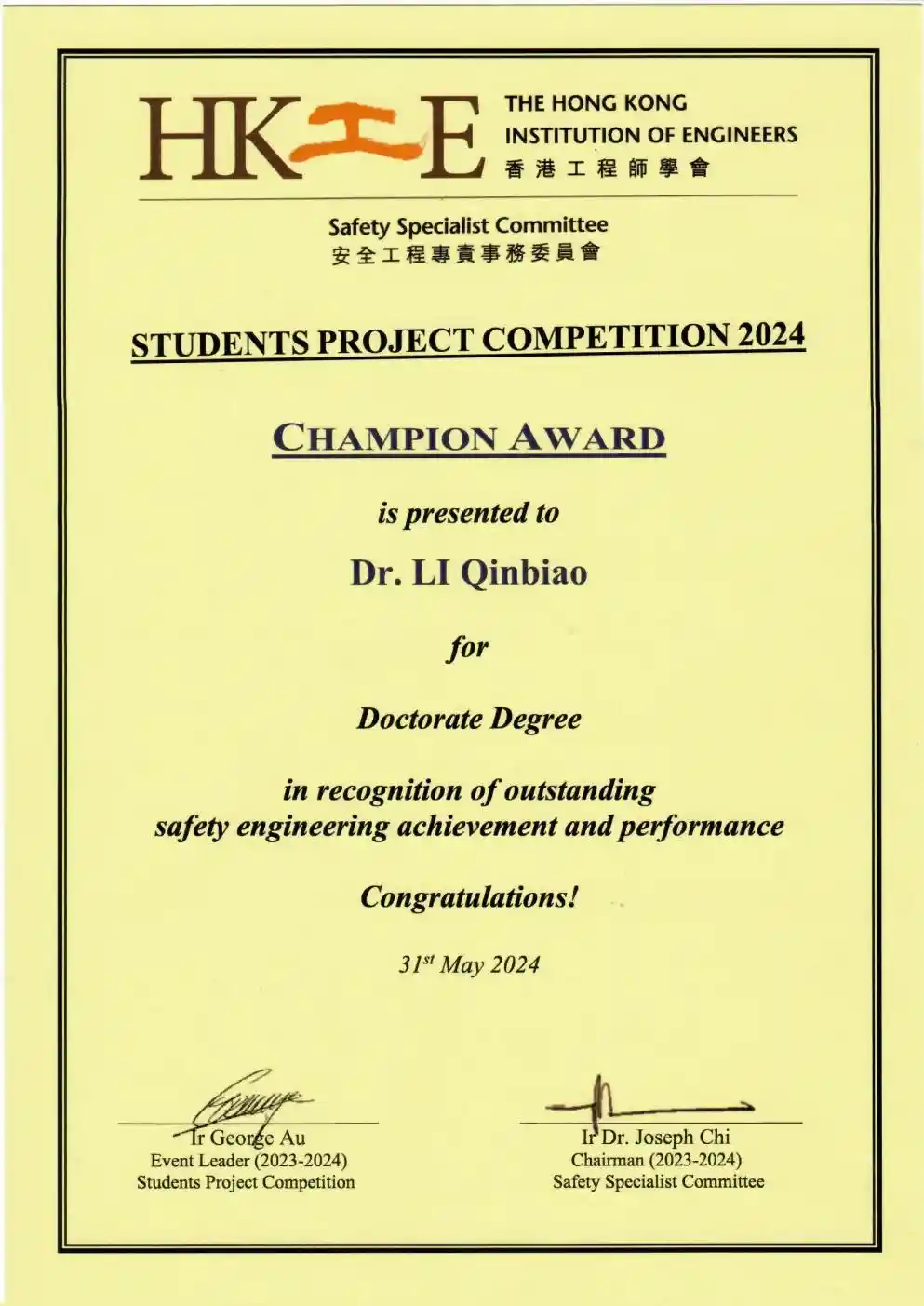
Champion Award (2024.05)
“Enhancing single-pilot operations in commercial aviation: A neuroergonomics analysis of human performance, capabilities, and limitations”
The Hong Kong Institution of Engineers (Safety Specialist Committee), HKSAR
Honorable Mention Award (2021.12)
“Situational Awareness and Flight Approach Phase Event Recognition based on Psychophysiological Measurements”
IEEE International Conference on Industrial Engineering and Engineering Management, Singapore
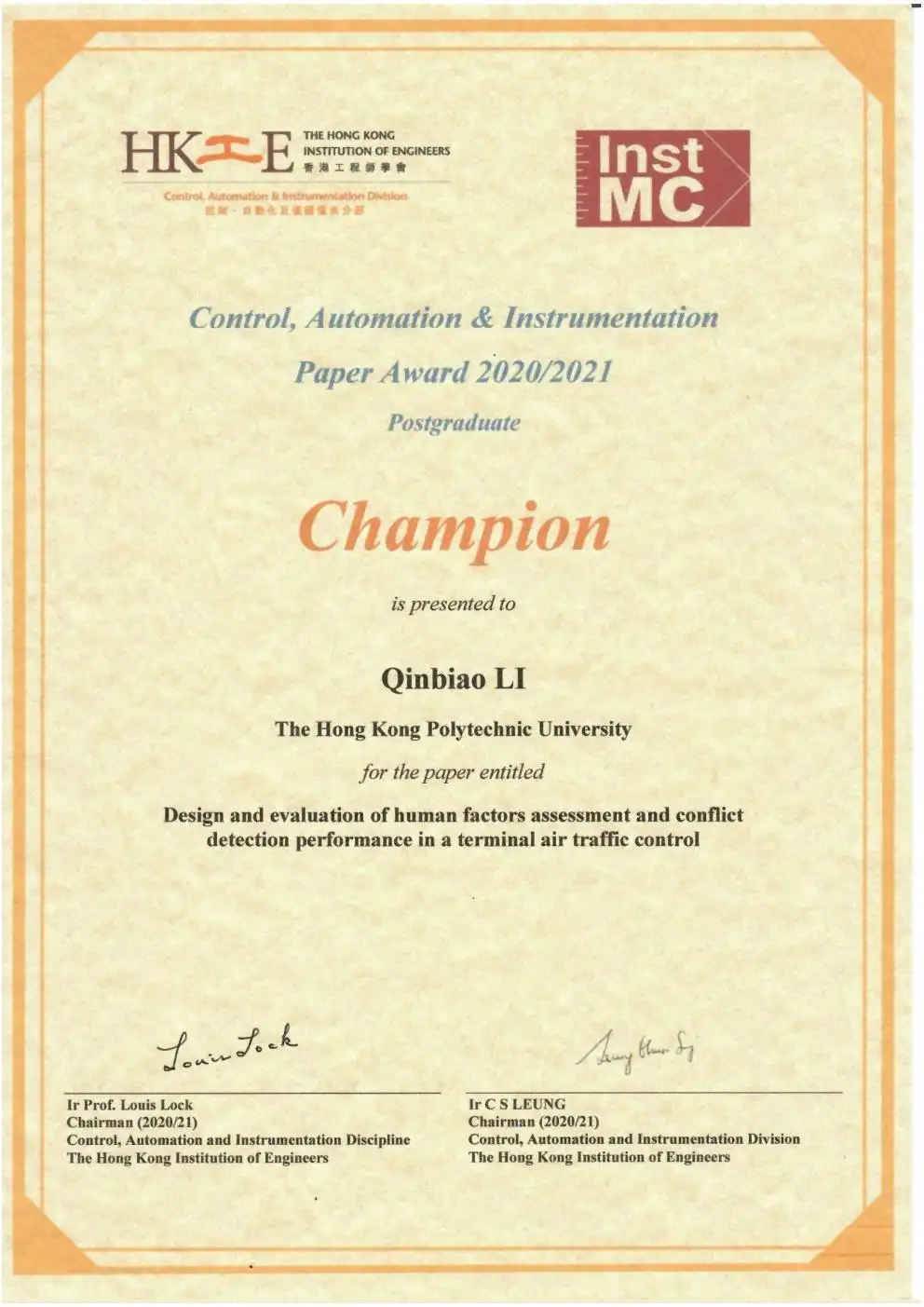
Champion Award (2021.05)
“Design and evaluation of human factors assessment and conflict detection performance in a terminal air traffic control”
The Hong Kong Institution of Engineers (Control, Automation & Instrumentation), HKSAR

Research Grant Record
2026.09 - 2028.08
Smart Traffic Fund, PI, Wearable Wristband-based Driver Attention Monitoring and Alerting System, HK$ 5,014,543.84.
2026.01 - 2028.12
National Natural Science Foundation of China, PI, Data-driven multi-factor consideration for enhanced unstable landing prediction and recommendation intervention, CNY$ 300,000.
2025.03 - 2028.02
Collaborative Project with Hong Kong Airlines, Co-PI, The unstable landing prediction-then-recommendation system design using QAR & pilot behavioural data, Data Resource
2024.11 - 2026.10
Smart Traffic Fund, Co-I, Development of human-centric driver support systems and training recommendations for safer cross-border driving during Northbound Travel for Hong Kong Vehicles, HK$ 7,703,151.61.
2024.11 - 2026.06
Start-up Grant under Strategic Hiring Scheme, PI, The prediction-then-recommendation system for improving landing stability by incorporating pilot behaviour characteristics, HK$ 300,000.
2022.09 - 2024.08
Smart Traffic Fund, Co-I, Investigation of an online data-driven intelligent automation platform for drivers considering the psychological condition instability and behaviours for a sustainable and safe transportation system, HK$ 5,544,700.15.