
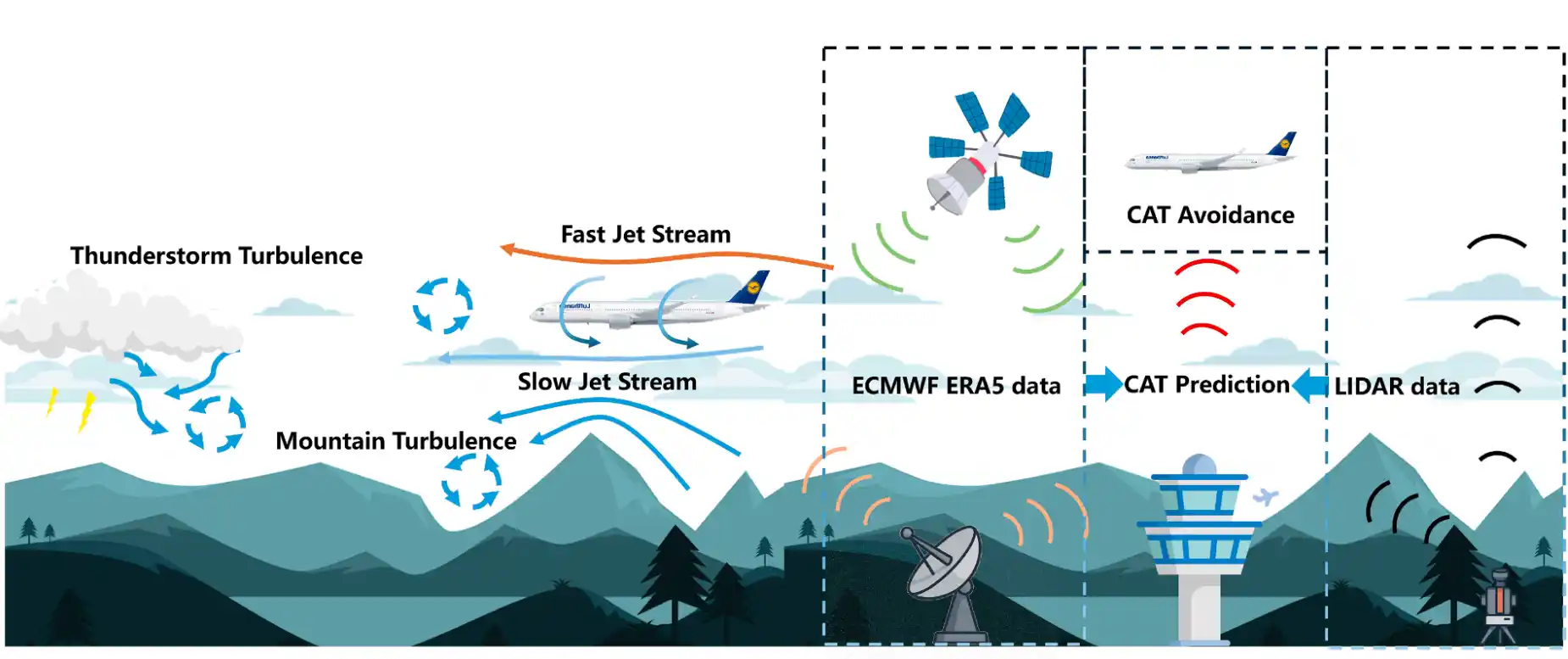
Clear-air turbulence (CAT) remains one of the most serious threats to cruise flight safety and efficiency — invisible, difficult to forecast accurately, and increasingly frequent due to climate change. In this work, we introduce a predict-then-optimise framework (TATOP) that tightly couples high-fidelity CAT forecasting with tactical in-flight trajectory optimisation.
Key contributions:
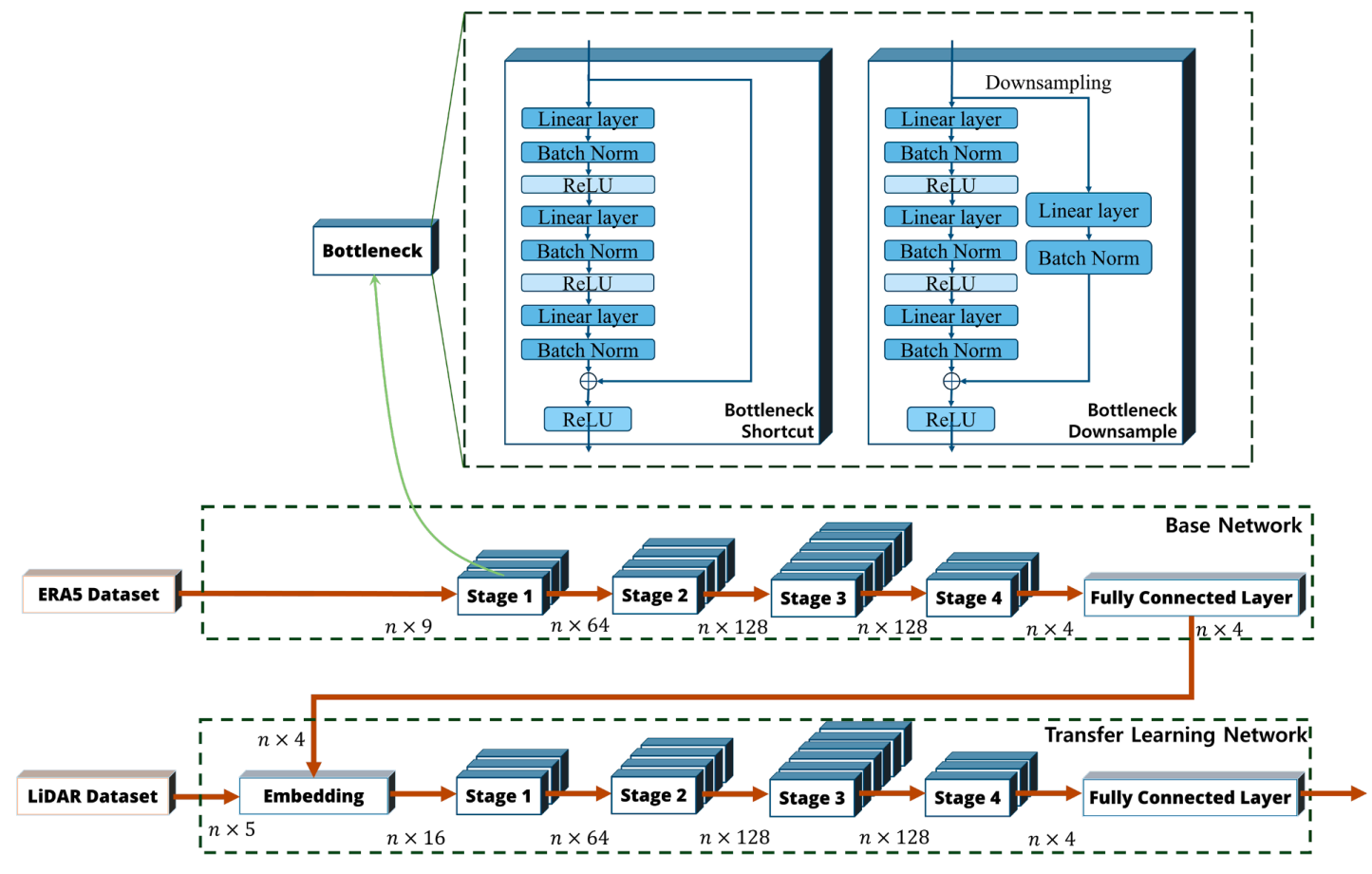
1) A transfer learning model (CAT-TLNet) that integrates ERA5 reanalysis with high-resolution Doppler LiDAR data to capture both large-scale and small-scale turbulent structures.
2) A data-driven CAT-to-EDR mapping and validation protocol derived from PIREPs for more reliable turbulence categorisation.
3) Two practical avoidance strategies — full CAT avoidance and partial CAT avoidance — that balance safety with operational cost and controller workload. Numerical experiments over North American airspace show that the framework significantly reduces turbulence exposure while maintaining reasonable fuel efficiency, offering actionable decision support for dispatchers, ATC, and pilots during the cruise phase.